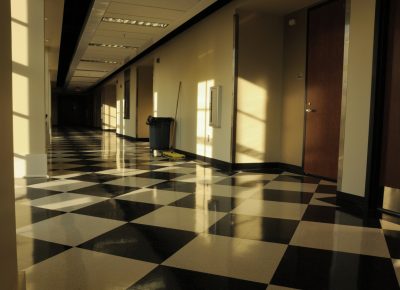
When it comes to maintaining high-traffic educational facilities, caring for VCT floors is one of the most critical investments you can make for your building’s longevity, safety, and appearance. Vinyl Composition Tile (VCT) is a standard flooring choice across elementary schools, high schools, and daycare centers because of its durability and affordability. However, the heavy foot traffic of hundreds of students, teachers, and staff can quickly wear down its protective surface without a dedicated upkeep strategy.
Why Caring for VCT Floors Is Critical for Educational Facilities
School hallways, classrooms, cafeterias, and daycare activity rooms endure constant daily demands. Scuff marks from shoes, grit tracked in from the playground, food spills, and dragged chairs all take a toll on raw tile.
Proactively caring for VCT floors keeps surfaces smooth and non-porous, offering key benefits for educational environments:
-
Improved Sanitation & Air Quality: Sealing porous tile prevents dirt, moisture, and bacteria from sinking into seams and crevices, making regular cleaning far more effective.
-
Student & Staff Safety: Well-maintained finish provides consistent traction, reducing slip-and-fall risks in busy corridors and lunchrooms.
-
Significant Cost Savings: Replacing damaged VCT flooring requires major capital expenditure and disruptive building closures. Routine care delays total replacement by years—or even decades.
Best Practices for Caring for VCT Floors on a Daily Schedule
Preventative maintenance stops abrasive dirt from acting like sandpaper against the tile finish. When staff members stick to standard cleaning protocols, caring for VCT floors becomes a quick, seamless part of the daily routine.
1. High-Performance Walk-Off Mats
Place heavy-duty entrance mats at all school doorways, daycare entrances, and cafeteria exits. Capturing soil, moisture, and sidewalk salt at the door prevents 80% of outer grit from ever touching your interior tiles.
2. Daily Dry Dust Mopping
Grit and micro-debris wear away the top finish under constant shoe friction. Sweep or dust mop hallways and classrooms daily using microfiber dust mops to remove loose soil before wet cleaning.
3. Neutral Damp Mopping
Clean floors daily using a neutral pH cleaning solution. Avoid harsh bleach, acid-based cleansers, or heavy solvent degreasers, which break down protective floor wax prematurely and cause yellowing or cloudiness.
Restorative Care: Stripping, Waxing, and Buffing
Even with meticulous daily cleaning, top layers of floor finish eventually absorb embedded dirt and lose their shine. Incorporating scheduled deep maintenance during school breaks ensures long-term tile protection.
-
High-Speed Burnishing (Mid-Year Recess): Buffing floor finish during winter or spring breaks heats and hardens the top wax coat, smoothing out light scratches and restoring a brilliant gloss without requiring full chemical stripping.
-
Top-Coating / Scrub and Recoat: Every 6 to 12 months, deep scrub the top layer of finish to lift ground-in dirt, then reapply 1 to 2 fresh coats of high-solids commercial floor wax.
-
Complete Strip and Wax (Summer Break): During major summer shutdowns, perform a full chemical strip to remove all degraded wax layers down to the bare VCT tile. Apply 4 to 5 coats of premium floor finish to build a dense, durable barrier before the new school year begins.
Partnering with Professional Facility Experts
Educational administrators and facility directors face tight timelines and demanding cleaning schedules. Long-term success in caring for VCT floors relies on using commercial-grade auto-scrubbers, correct chemical dilution systems, and trained personnel who understand floor chemistry.
By combining consistent daily cleaning routines with scheduled professional floor restoration during school breaks, you protect your facility’s budget and provide a clean, safe environment for students to learn and grow.


